
Friendships at work, once the bedrock of corporate culture and adult life, are on the wane.
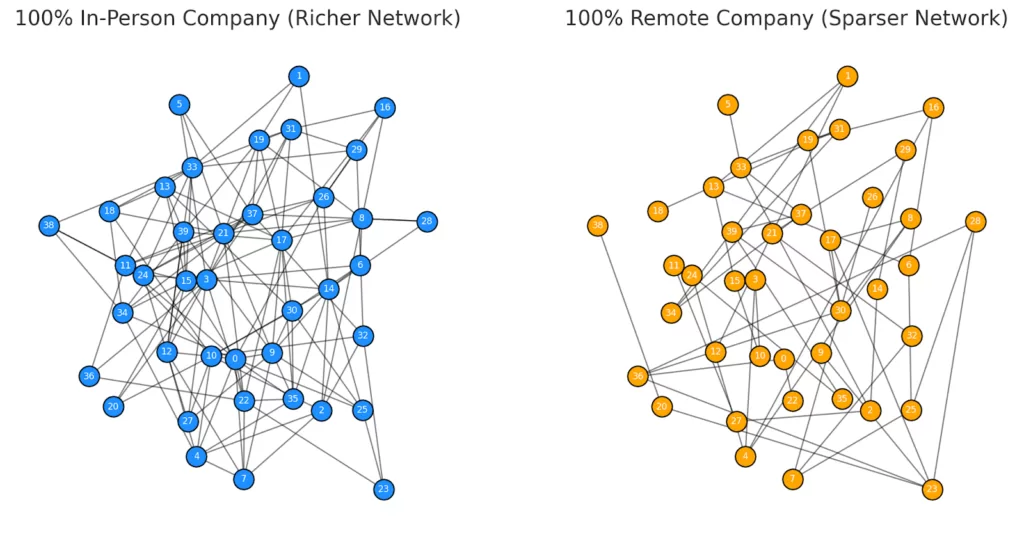
The root cause is clear: 79% of knowledge workers now work remotely at least some of the time, and 28% are exclusively remote (Gallup). Remote work is thinning our connections, and colleagues are having less fun together.
This isn’t just about missed water cooler chats—a lost sense of belonging is reshaping how employees relate to their work and each other. “The modern workday is fueling an epidemic of isolation,” according to the Wall Street Journal.
Obviously, remote work does have some positive effects. Companies save money on office space. Employees, on average, reclaim 5 hours of commuting time weekly; and they’re interrupted less often, and gain flexibility to schedule plumber visits or emergency errands.
GenZ workers who have never worked in an office don’t even know what they’re missing…
The cons, though less obvious, are also big. Morale is suffering — Zoom and Slack are no substitute for a busy office’s casual lunch-time outings and impromptu friendships.
- Work-from-home and hybrid work don’t enable interactions among colleagues during lunch, happy hours, after-work sports leagues, and/or random encounters in the hall, elevator or parking lot.
- Fewer opportunities to connect mean fewer friendships, less fun and a reduced sense of belonging.
- The net result: significant and numerous negative effects on both knowledge workers and employers.
Why work friendships matter
While friendships among colleagues are difficult to tally and don’t appear on any corporate balance sheet, they’re crucial to the well-being of both employers and employees.
Work friends are foundational to employee happiness, job satisfaction and job loyalty. 70% of employees say friends at work are the “most crucial element” to a happy working life. And 25% of workers say they stay at their current job because they’ve got a “work-bestie.”
As relationship guru Esther Perel put it in a recent newsletter: “Work friendships are not always easy, but they are essential. They are the quiet scaffolding that holds us up in our work and, sometimes, in our lives. Many of us spend more of our waking hours with our colleagues than we do with our own families.”
Work friendships aren’t just important for personal happiness. They’re vital to lubricating cooperation and knowledge exchange, and reducing burnout and turnover. “Strong relationships are the foundation for trust, support and meaningful work,” Gallup concluded in a 2024 survey.
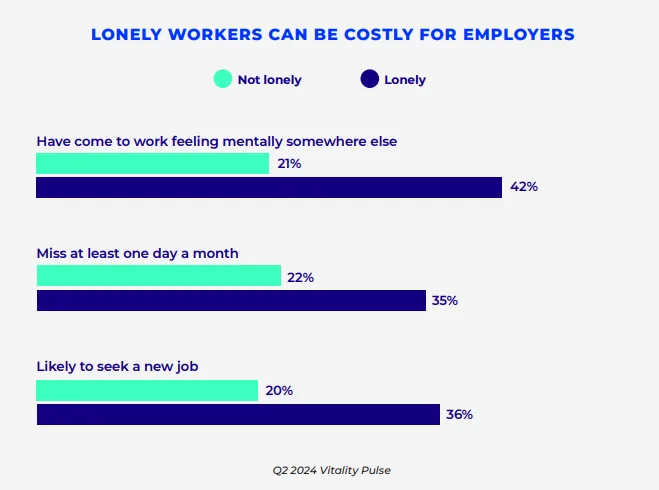
People who aren’t well-connected at work are more prone to burnout and absenteeism. “In the U.S., stress-related absenteeism attributed to loneliness costs employers an estimated $154 billion annually,” according to one study. Burnout is at 66%, and rising (MedicalDaily).
Lonely workers are significantly less productive and engaged at work on a variety of metrics, according to a 2024 study by The Evernorth Research Institute. Most importantly, fully remote employees are the loneliest: 25% report feeling lonely, vs. 16% of on-site workers (Gallup).
Zooming out from the workplace, social life in the United States is grounded in work friendships. “Americans are now more likely to make friends at work than any other way — including at school, in their neighborhood, at their place of worship, or even through existing friends,” according to the Survey Center on American Life.
Remote work thins connections among colleagues
It’s no surprise, then, that remote work can disrupt employee happiness and productivity. “Physical distance can create mental distance,” as Gallup, which has conducted many surveys examining work-based friendships and socializing, sums up the dynamic.

The lonely world beyond work
Sadly, it’s not just our workplaces that are becoming more disconnected — America itself is in the middle of a loneliness epidemic, according to the Survey Center of American Life.

Many companies are oblivious
Management has a blind spot when it comes to the friend-and-fun deficit caused by reduced time spent together in the office. It’s easy to ignore or underestimate the negatives – lower job satisfaction, loneliness, less collaboration – because the harms are often invisible, manifested at the kitchen table rather than in an office down the hall. Maybe worse, GenZ workers who have never worked in an office don’t even know what they’re missing!
The challenge of boosting workplace friendships is understudied among academics and HR professionals; a review of 577 academic studies found that “few interventions aiming to reduce loneliness in working-age adults have been delivered in the workplace, and those that have targeted workers’ skills and cognitions, rather than their work environment.”
Supporting employee relationships is a lot harder than building offices or buying new computers. Even when there’s awareness of WFH’s impact on relationships, work friendships and fun are intangible and difficult to measure. As a result, unfortunately there is no discussion or line item in an organization’s annual report of one of its most important assets – “total work-besties.”
What can managers and HR do?
As Gallup sums up the conundrum for companies, “to ignore friendships is to ignore human nature.” Work friendships are vitally important to happiness, productivity and retention. Friendship at work are diluted by WFH.
Employees are looking to managers to recognize the problem and take action. “84% of staff think it’s important companies facilitate personal interactions to help develop work friendships,” according to a report by KPMG.
What can you do? First, write team@racery.com to request our white paper about the hidden costs of remote work for knowledge workers and employers — it’s got additional information and links to foundational studies on the topic.
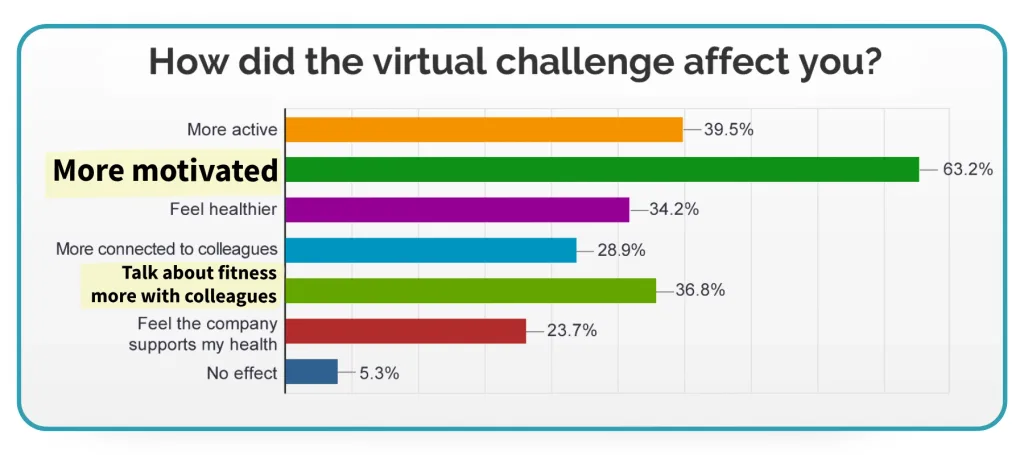
Next, if your organization is looking to foster new joy and connections among employees, visit Racery’s corporate virtual race features and fees page. Racery conducts various post-event surveys, consistently finding improved morale. One Racery survey of ~350 employees after a 17-day race, 56% said they felt more connected to colleagues (survey).
- Check out some of our many pre-built virtual races and challenges for corporations, plus our new quiz integration with virtual challenges.
- For more information about our virtual races, please request a demo or try one of our free trial virtual races.